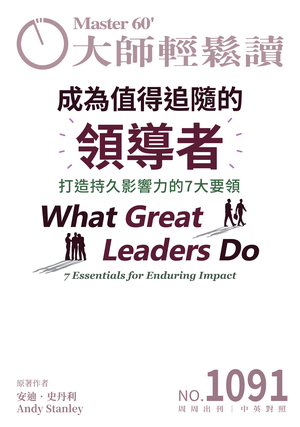




打造持久影響力的7大要領
有人跟隨你,不代表你值得追隨。職位與能力可以帶來影響力,但真正長久的領導力,始於管好自己,並在一次次考驗中贏得信任與尊重。
Having followers doesn't mean you're worth following. Position and talent may bring influence, but truly enduring leadership begins with leading yourself well and earning trust and respect through every test.
卓越領導始於一個看似簡單的問題:「卓越領導者會怎麼做?」
領導天分或許能讓人擁有影響力、權力和追隨者,但光靠這些,並不足以讓人值得追隨。長久的領導力,需要有紀律的行為,讓能力、品格、判斷力與人際關係相互配合。
卓越領導者從領導好自己開始。他們對自己說實話,選擇自己最看重的事,而不是眼前想要的東西,並邀請會挑戰自己的人走進生活。他們專注發揮自身優勢,而不是試圖樣樣精通,並讓能力與自己互補的人圍繞在身邊。
他們也保持好奇。他們不預設自己已有答案,而是提出能揭露假設、激發他人智慧的問題。他們尊重直覺,但不盲從。他們明白,有些組織內的拉扯無法一勞永逸地解決,必須持續管理。卓越領導者也不會任由成功的樣貌含糊不清:大家必須知道勝利的模樣,以及自己如何對此做出貢獻。最後,領導者也必須抗拒伴隨權力而來的孤立。
領導的卓越,不是由職位、個性或意圖來定義,而是從領導者一再做出的選擇中顯露出來。
Great leadership begins with a deceptively simple question: "What would a great leader do?"
Leadership talent may give someone influence, authority, and followers, but those things alone don't make that person worth following. Sustainable leadership requires disciplined behaviors that keep ability, character, judgment, and relationships working together.
Great leaders start by leading themselves well. They tell themselves the truth, choose what they value most over what they want now, and invite people into their lives who will challenge them. They concentrate on their strengths rather than trying to become good at everything, and they surround themselves with people whose abilities complement their own.
They also remain curious. Instead of assuming they have the answers, they ask questions that expose assumptions and unlock other people's intelligence. They respect intuition without blindly obeying it. They recognize that some organizational tensions cannot be permanently solved but must be continually managed. Great leaders also make success unmistakably clear. People need to know what winning looks like and how their work contributes to it. Finally, leaders must resist the isolation that accompanies authority.
Leadership greatness isn't defined by position, personality, or intention. It's revealed by what leaders repeatedly choose to do.

